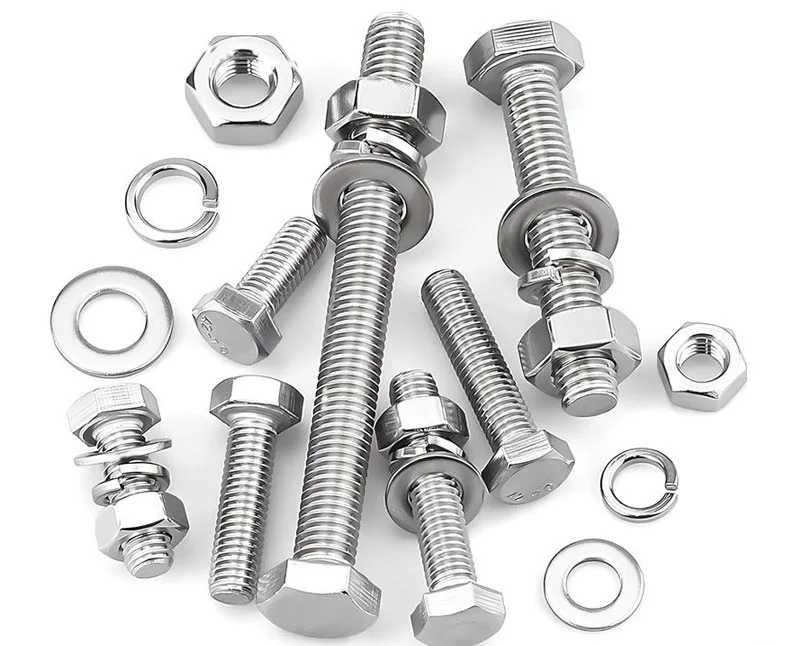


From the outside, they seem simple; however, these minute engineered pieces connect entire industries protocol in silence. Whether it is a bolt being more than loose in the construction project or if we are talking about some weak fastening system inside industrial equipment both can make serious safety and performance problems. That is why industries from all around the globe are being more aware of Fastener Quality, longevity and certifications than they have done before. Whether for oil refineries, railway systems, manufacturing units or infrastructure projects the right fastener is not just another hardware item. It’s a piece of the engineering.
What are fasteners used in industrial grade?
Industrial Grade Fasteners are high-strength mechanical components that are used to join or secure materials together in demanding environments. They can withstand heavy loads, vibration, pressure, heat and corrosion without failure.Industrial fasteners are manufactured to rigorous specifications and tested in controlled environments, unlike typical hardware store fasteners that you find at your local home repair supply box. Some common examples include:
- Nuts
- Bolts
- Screws
- Washers
- Stud Bolts
- Threaded Rods
- Anchor Fasteners
You can discover them in sectors such as:
- Construction
- Power Plants
- Automotive
- Aerospace
- Marine Engineering
- Railways
- Oil & Gas
- Heavy Machinery Manufacturing
Contact us for more information!
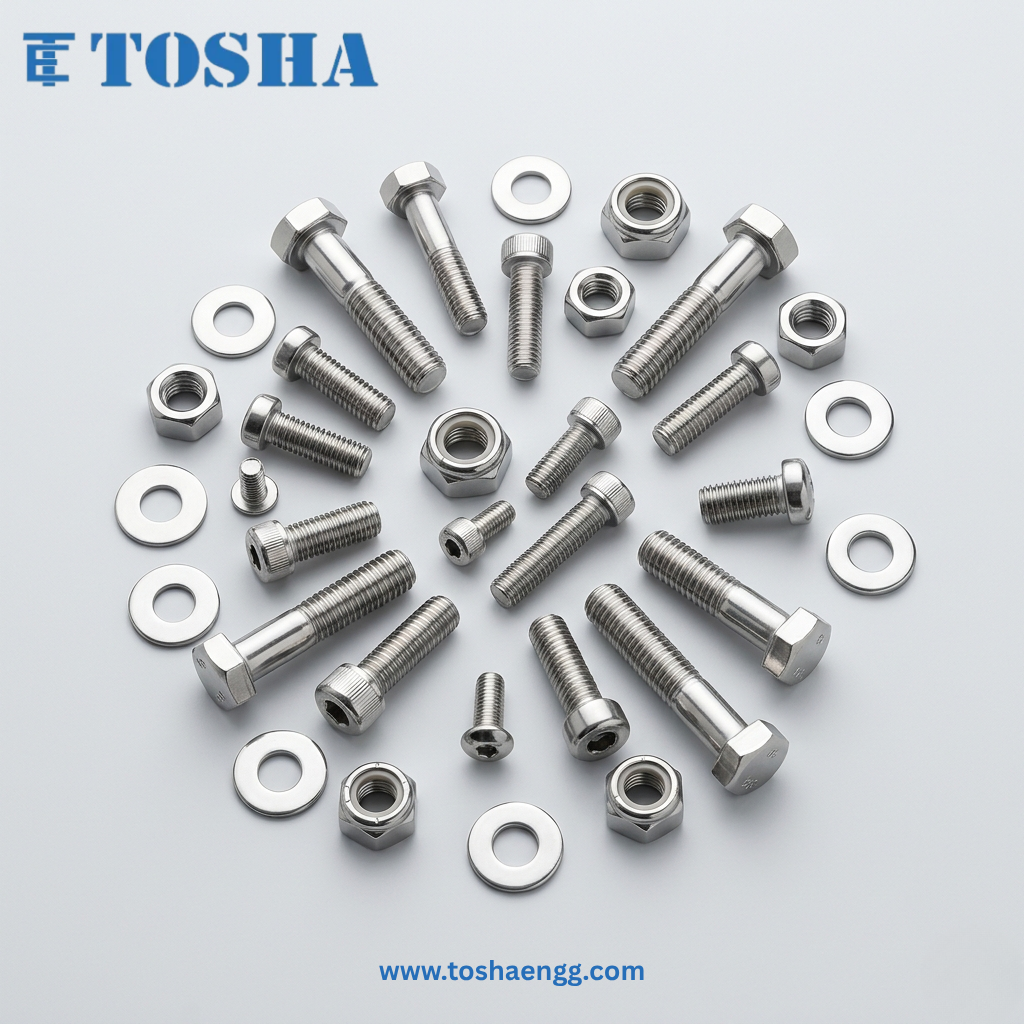
The Why Behind Fastener Quality & Rigid Certifications
For instance, some years back, a manufacturing contractor blogged about their experience with a breakdown on one of its machines attributed to low-grade bolts. Not only was the repair cost not cheap, but it also cost the factory almost two days of lost production. All because somebody was trying to skimp on fasteners.That is, Fastener Quality. It directly affects:
- Structural Stability
- Equipment Safety
- Operational lifespan
- Maintenance costs
- Worker safety
- Project reliability
Types of Industrial Grade Fasteners Used in Engineering
Structural Bolts
Structural Bolts are utilized in pre-engineered steel structures, bridges, industrial buildings and infrastructure projects. They have high tensile strength for heavy loads. They are of significance particularly where vibration resistance and secure clamping force is a must.Stainless Steel Fasteners
These fasteners are suitable for both humid, chemical environments and extreme weather. They are widely used in marine projects and food processing industries where corrosion resistance is the top priority.High Tensile Fasteners
Designed to withstand high pressure and mechanical load applications, this style fastener is commonly used in automotive, mining and industrial machinery.Anchor Fasteners
Used for securely fastening structures to concrete. You usually see them at construction sites and industrial foundation work.Threaded Rods & Stud Bolts
They are widely used in pipeline, refinery and power plants because of the high strength and adjustability with the need to clamp.Relevance of ISO Certified Fasteners in Contemporary Industries
These days, industries are not merely looking for bolts and screws. They want ISO Certified Fasteners specifically.Why? Certification gives confidence that the product conforms to internationally accepted standards for:
- Material Strength
- Dimensional Accuracy
- Corrosion Resistance
- Load Capacity
- Manufacturing Consistency
This also assists the companies in making use of ISO Certified Fasteners:
- Reduce Failure Risks
- Improve Compliance
- Increase Project Reliability
- Maintain Safety Standards
- Build Long-Term Trust with Clients
Role of Engineering Fasteners in Supporting Heavy-Duty Applications
Engineering Fasteners are much more than just joining parts together. These parts are built to resist:- Continuous Vibration
- Heavy Impact Loads
- Temperature Fluctuations
- Chemical Exposure
- Moisture and Corrosion
- High Pressure Environments
Main Materials Used in Industrial Fasteners
Material selection is based on the application and environmental conditions. Common materials include:| Material | Main Benefit |
| Stainless Steel | Corrosion Resistance |
| Carbon Steel | High Strength |
| Alloy Steel | Heat & Pressure Resistance |
| Brass | Electrical Conductivity |
| Titanium | Lightweight & Durable |
If you pick the wrong material, equipment life can be dramatically shortened. This is why, in most cases, buyers for industrial applications will first look at environmental exposure before choosing fasteners.
Industrial Grade Fasteners: An Overview of Their Use in Different Industries
You would actually be amazed at the number of industries which relies on Industrial Grade Fasteners every day.-
Construction Industry: Utilized in towers, bridges and commercial frameworks.
-
Automotive Industry: Crucial for engines, suspension systems and vehicle assembly.
-
Oil & Gas Sector: Here fasteners have to withstand very high temperatures as well as corrosive environments.
-
Power Plants: In high-pressure applications, durable heat-resistant fastening systems are essential.
-
Railway & Infrastructure: The fastening component is the key part of track, signal and heavy equipment.
Selecting Industrial Fasteners
Choosing the right type of fastener has more to it than simply by size and shape. Here are some of the important things engineers generally consider:- Load Requirements
- Environmental Conditions
- Corrosion Exposure
- Temperature Range
- Strength Grade
- Certification Standards
- Installation Method