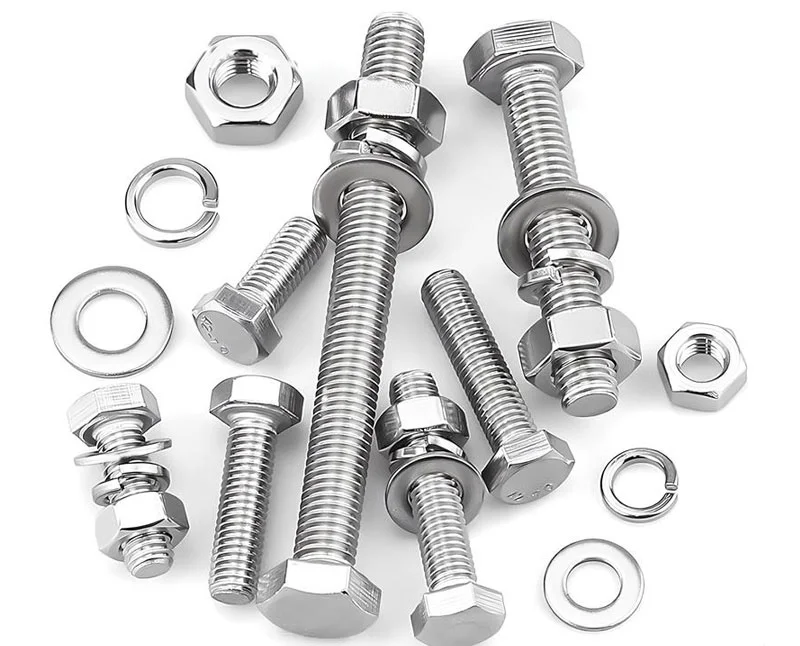


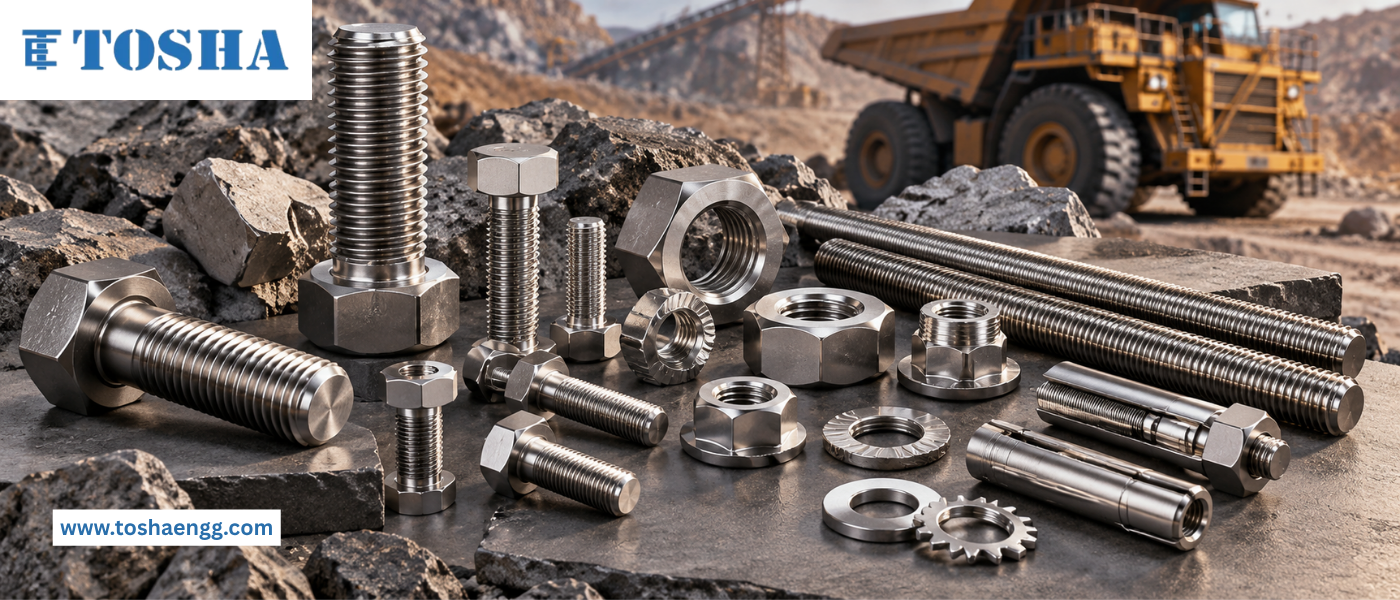
Choosing the right Mining Equipment Fasteners is therefore more than a purchasing decision. It is an important part of keeping mining machinery operational, reducing unexpected downtime, and maintaining dependable connections throughout demanding industrial applications.
Why Do Mining Operations Need Specialised Fasteners?
Mining equipment rarely operates under ideal conditions. Crushers experience repeated impact, conveyor systems run for extended periods, and excavators face changing loads during digging and material handling. Fine dust can enter exposed joints, while moisture and corrosive substances may gradually damage unprotected metal surfaces.Under these conditions, an unsuitable fastener may loosen, corrode, deform, or fail prematurely. The resulting problem can extend beyond the replacement cost of a single bolt. Equipment stoppages, additional labour, production delays, and unplanned maintenance can make a small component failure surprisingly expensive.
High-quality Industrial Fasteners for Mining are selected according to the demands of each application. Material strength, dimensional accuracy, thread quality, surface protection, and compatibility with the mating components all contribute to dependable performance. Rather than choosing a fastener simply because it fits, maintenance teams need to consider how it will perform throughout the equipment's operating life.
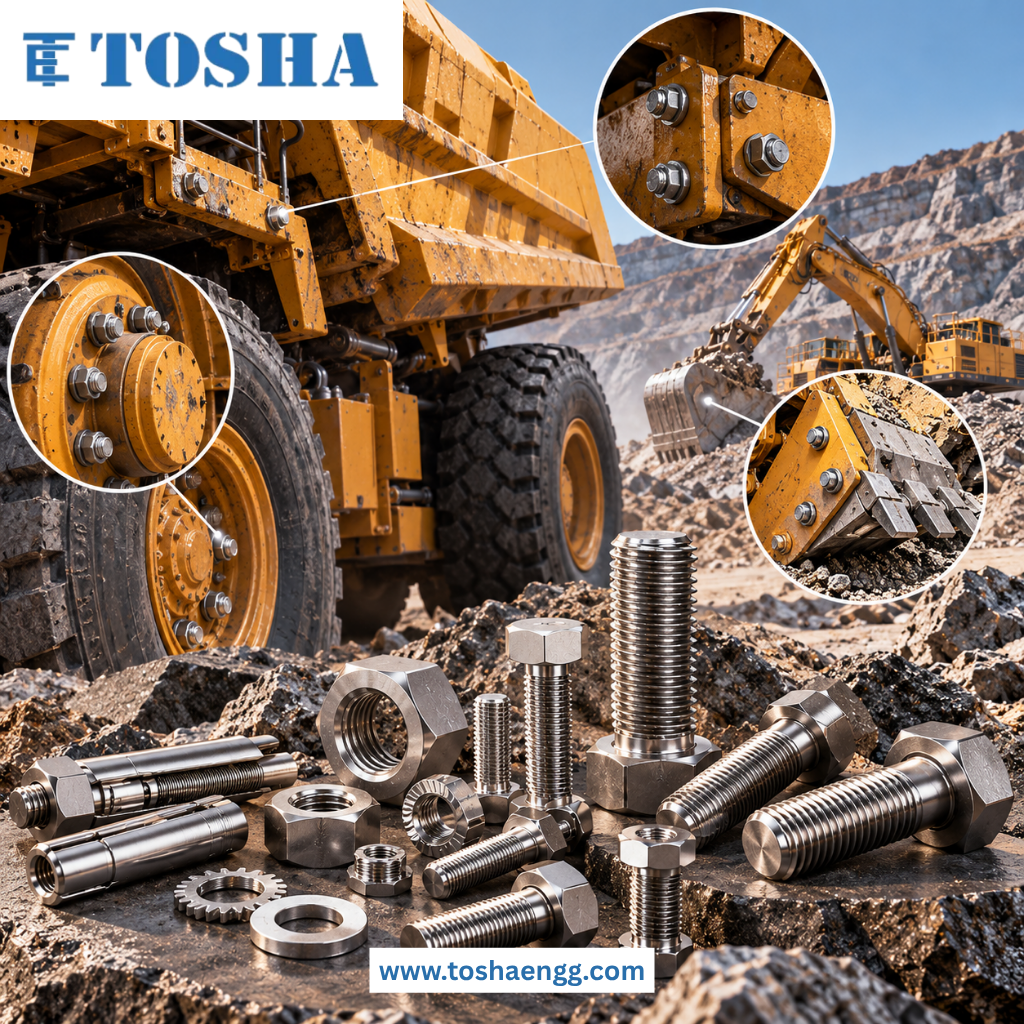
Types of Mining Equipment Fasteners and Their Applications
Different machines require different fastening solutions. Understanding the purpose of each component helps engineers and procurement teams specify products that meet their equipment's actual requirements.Bolts and Nuts for Heavy Machinery
Bolts and nuts create secure mechanical joints between machine components, structural members, covers, and mounting assemblies. They are widely used in crushers, excavators, loaders, drilling equipment, and material-handling systems.Reliable Mining Machinery Bolts must match the joint's dimensions, loading conditions, and specified strength requirements. For example, a connection exposed to repeated vibration may need a carefully engineered tightening method and an appropriate locking arrangement. A structural connection, meanwhile, may require a particular bolt grade, washer configuration, and installation procedure.
Selecting compatible bolts and nuts as a complete assembly helps maintain joint integrity and reduces the risk of premature wear or loosening.
High-Tensile Fasteners for Load-Bearing Connections
Some mining applications demand fasteners with greater mechanical strength than standard commercial hardware can provide. These connections may experience substantial tensile forces, heavy clamping loads, or repeated changes in operating conditions.High Tensile Bolts for Mining Equipment are manufactured to specified mechanical property classes and are suitable for applications where their strength characteristics meet the engineering requirements. Common metric property classes include 8.8 and 10.9, although the appropriate selection depends on the design, material compatibility, and operating environment.
Higher strength alone does not guarantee better performance. A fastener must also provide suitable toughness, fatigue resistance, and resistance to environmental damage. Correct tightening is equally important because an incorrectly installed high-strength bolt can compromise the entire connection.
Studs, Screws, and Washers
Not every mining assembly can use a conventional bolt-and-nut arrangement. Studs are useful where threaded engagement is required at both ends or where equipment design calls for a particular fastening arrangement. Screws provide alternative mounting solutions, while washers help distribute bearing loads or serve specific functions within an engineered joint.These components are used across pumps, motors, machine housings, support structures, and other industrial assemblies. Choosing the correct combination helps ensure that the connection fits the design and remains serviceable during maintenance.
Where are Heavy-Duty Mining Fasteners Used?
The demand for Heavy Duty Mining Fasteners extends across the entire mining operation, from extraction and crushing to transportation and processing.In crushers and grinding mills, fasteners secure components that experience substantial mechanical forces and repeated impact. Conveyor systems depend on reliable connections for supporting structures, drive assemblies, and other equipment that transports material continuously. Excavators and loaders require dependable fastening solutions for structural and mechanical assemblies exposed to changing loads, while drilling rigs rely on correctly specified components to maintain equipment integrity during demanding operations.
Processing plants introduce additional requirements. Pumps, motors, screens, and material-handling equipment may operate in dusty, damp, or chemically challenging environments. The fasteners used in these locations must suit both the mechanical load and the surrounding conditions.
This is why a single fastener specification should not automatically be applied throughout an entire mine. Each connection has its own requirements, and the correct specification helps balance reliability, maintenance needs, and overall operating costs.
How to Choose the Right Fasteners for Mining Machinery
Effective Fastener Selection for Mining Machinery begins with understanding the application rather than starting with the product catalogue. Engineers and buyers should evaluate the complete joint, including the forces acting on it, the materials being connected, and the conditions in which the equipment operates.Consider Load, Strength and Vibration
The first step is to identify whether the connection experiences static loading, repeated movement, shock, or cyclic stress. The selected fastener must meet the design requirements for strength and fatigue performance without introducing unnecessary risks.Vibration also deserves careful attention. Depending on the joint design, suitable locking features, controlled tightening procedures, or other engineered anti-loosening measures may be necessary. Torque values should follow the equipment manufacturer's instructions or an approved engineering specification rather than relying on a general estimate.
Select Materials and Surface Protection Carefully
Mining environments can expose fasteners to moisture, abrasive particles, temperature changes, and corrosive substances. Material and coating selection should reflect these conditions.Carbon steel and alloy steel fasteners are commonly considered where mechanical strength is important. Stainless steel may be appropriate for selected corrosive environments, provided its mechanical properties and compatibility meet the application requirements. Protective coatings can also improve corrosion resistance, but the coating process must be suitable for the fastener's strength class.
For high-strength fasteners, coating selection deserves particular care because certain manufacturing and plating processes can introduce hydrogen embrittlement risks. Consult the supplier and applicable specifications before choosing a finish.
Check Dimensions, Standards and Quality
Correct diameter, length, thread pitch, property class, and thread engagement are essential for a reliable connection. The selected nuts and washers must also be compatible with the bolt and the joint design.For critical mining applications, procurement teams should verify applicable standards, material traceability, and relevant inspection or test documentation. Working with a supplier that understands industrial fastening requirements can make specification checks and repeat purchasing more straightforward.
How the Right Fasteners Help Reduce Mining Downtime
Unplanned downtime is costly in mining because a failure in one component can interrupt an entire production process. A conveyor stoppage, for instance, may affect material movement well beyond the immediate repair location.Well-specified Mining Equipment Fasteners help reduce avoidable fastening problems when combined with correct installation, routine inspections, and preventive maintenance. Maintenance teams should look for visible corrosion, damaged threads, joint movement, and other signs of deterioration. Any retightening or replacement should follow the equipment manufacturer's procedures, particularly for safety-critical or preloaded joints.
Fasteners should not be reused automatically simply because they appear undamaged. Some applications require replacement after removal, especially where the original specification or installation procedure says so. Keeping commonly required components available can also help maintenance teams respond faster when repairs become necessary.
Why Choose Tosha Engineering for Industrial Fastening Requirements?
Finding a suitable supplier is an important part of building a dependable maintenance and procurement strategy. Tosha Engineering offers a range of industrial fastening products, including bolts, nuts, screws, washers, studs, and other threaded components for engineering and industrial applications.The company also supports customised fastener requirements based on customer drawings and specifications. This can be useful when standard catalogue products do not meet the dimensional or application requirements of a particular machine.
For businesses sourcing Industrial Fasteners for Mining, clear specifications and communication are essential. Sharing the required dimensions, material, strength class, operating environment, and relevant equipment details helps establish which products are appropriate for further evaluation.
Explore the available products at Tosha Engineering and discuss your fastening requirements with the team to identify suitable options for your application.
Conclusion
Mining machinery depends on thousands of carefully selected components working together under demanding conditions. The right bolts, nuts, studs, screws, and washers help maintain secure connections, support planned maintenance, and reduce avoidable equipment interruptions.Investing in suitable Heavy Duty Mining Fasteners, correctly specified Mining Machinery Bolts, and application-appropriate High Tensile Bolts for Mining Equipment can make a meaningful difference when strength, durability, and reliability matter. By following a systematic approach to Fastener Selection for Mining Machinery, mining operators can make better purchasing decisions and support the long-term performance of their equipment.
Looking for dependable Mining Equipment Fasteners for your industrial requirements? Visit Tosha Engineering to explore its fastening solutions and enquire about products suited to your application.