

Why Farm Machines Are So Rough on Fasteners
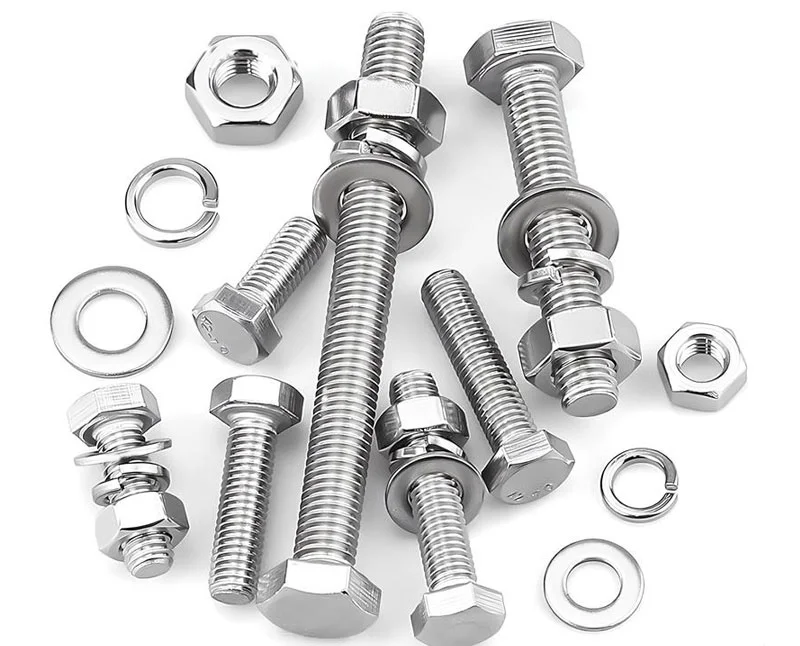
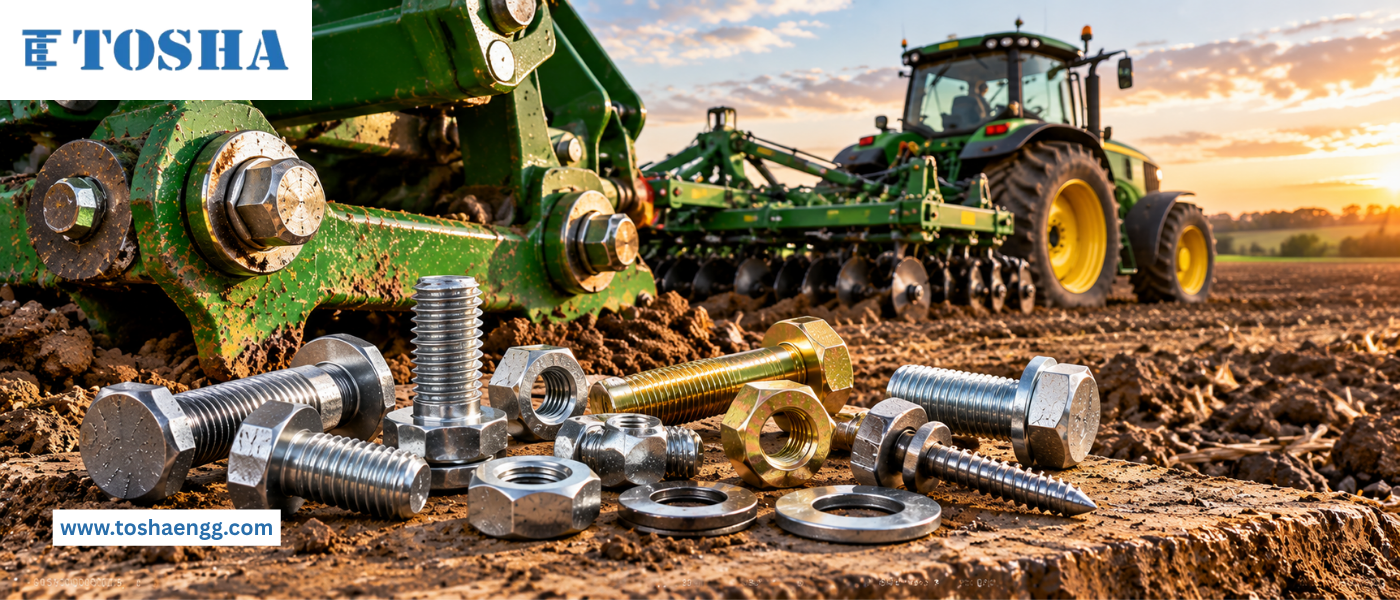
A farm machine does not get an easy life. Ploughs drag through hard soil, harvesters rattle for hours over bumpy ground, and trolleys carry loads that shift with every pothole. On top of that comes mud, dust, rain, irrigation water, and the occasional splash of fertilizer. Every one of these things works against a bolt.That is why Fasteners Used in Agricultural Machinery cannot be treated like ordinary hardware. A bolt that sits happily in a dry workshop may rust, stretch, or snap after one wet season in the field. Good material, clean threading, and a proper coating are what separate a fastener that lasts for years from one that gives up in a few months.
Tractor Bolts and Nuts: Small Parts, Big Responsibility
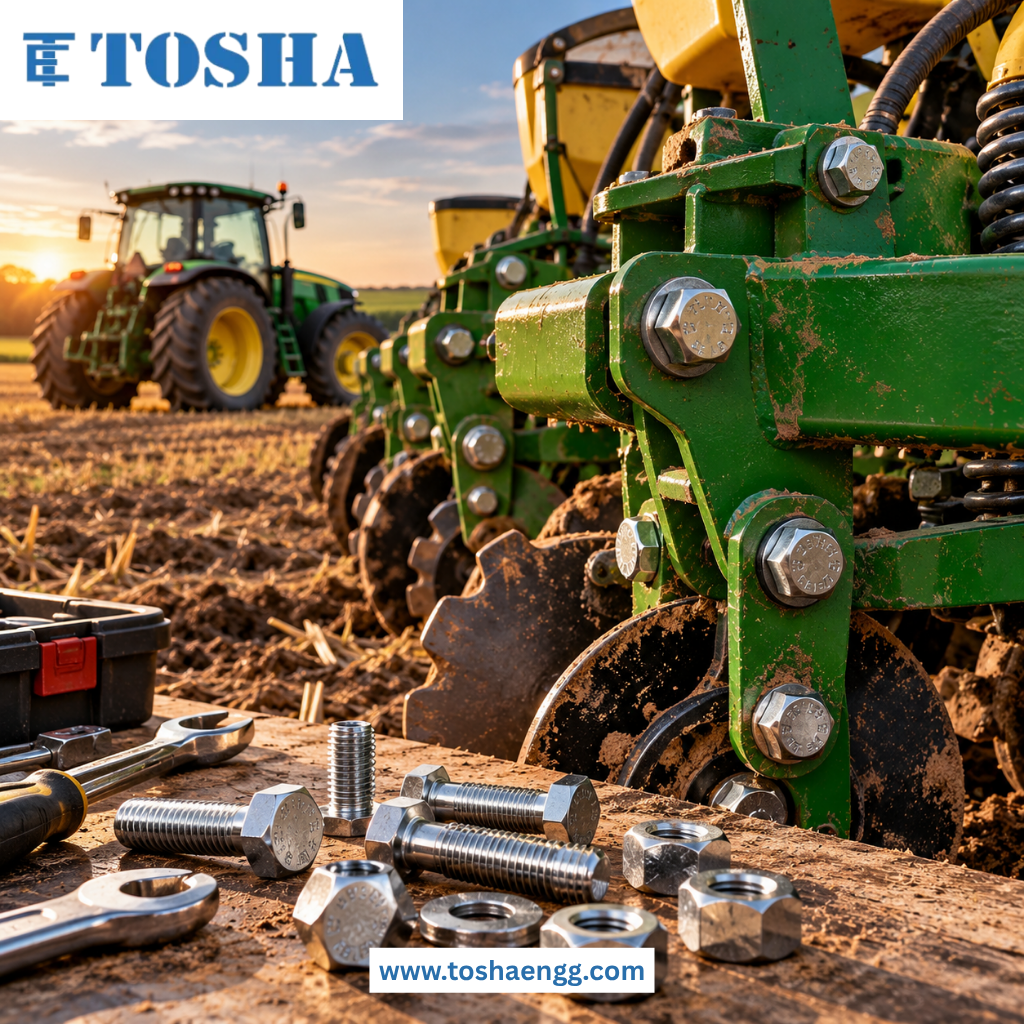
The tractor is the workhorse of most farms, and Tractor Bolts and Nuts hold nearly everything together, from the engine and gearbox to the axles, wheels, and hydraulic fittings. Think about the wheel nuts for a moment. They carry the weight of the whole machine and handle constant twisting force, so one loose nut can damage a hub or, worse, cause an accident on the road.Fit matters more than most people realise. Thread size, pitch, strength grade, and length all need to match the design. Using a bolt that is only slightly off might seem fine on the day, but it can load the joint unevenly and wear it out early. When you use the correct bolts and nuts with the right washers, the joint stays tight and the tractor keeps doing what it is meant to do.
Heavy Duty Fasteners for Tractors Where Stress Is Highest
Not every part of a tractor is stressed equally. Hitches, drawbars, front loaders, axle supports and implement mounting points take sudden pulls and heavy shocks, especially when a loaded trolley meets a rough patch. For these spots, Heavy Duty Fasteners for Tractors are the sensible choice. They are usually made from heat-treated alloy or medium carbon steel in higher strength classes such as 8.8 and 10.9.Strength is only half the story, though. A good heavy-duty bolt also needs toughness, which means it can flex a little under shock without cracking. That balance comes from careful forging and controlled heat treatment. A manufacturer that tests every batch gives you bolts that behave the same way each time, which is exactly the kind of predictability you want when the load behind you is heavy.
Agricultural Equipment Bolts for Every Implement
A tractor is only as useful as the tools it pulls, and each of those tools has its own fastening needs. Ploughs, cultivators, seed drills, rotavators, balers, and harvesters all rely on specific Agricultural Equipment Bolts. Plough bolts often have countersunk heads, so the surface stays smooth against moving soil. Rotavator blade bolts fight strong twisting forces every time the blades bite into the ground. Harvester parts need bolts that can handle hours of vibration without loosening.Using the same bolt for every job is a common shortcut, and it usually costs more in the long run. Matching the bolt style, grade, and finish to the actual task gives longer life and far fewer repairs in the middle of a busy season.
Fighting Rust with the Right Fasteners for Farm Equipment
Rust is a quiet enemy. It does not stop a machine overnight, but it slowly weakens threads and makes bolts almost impossible to remove when you need to. Rain, irrigation, fertilizer, and pesticide all speed it up. Good Fasteners for Farm Equipment come with coatings such as zinc plating, hot-dip galvanizing, or zinc-flake finishes that slow corrosion down. For sprayers, irrigation equipment, and dairy machinery, stainless steel is worth considering because it handles constant moisture and chemicals very well.A better coating costs a little more at the start, but it usually pays for itself. Anyone who has spent an afternoon fighting a seized, rusty bolt, or cutting one off and damaging the part around it, knows how quickly the savings add up.
How to Pick the Right Fastener Without Guesswork
Start by thinking about the job. Is the joint holding steady weight, taking repeated shocks, or shaking constantly? That tells you what strength grade to choose, and it is always wise to leave a comfortable safety margin. Then think about where the machine works. A dry, dusty field is very different from a wet paddy or a farm near the coast.Next, check the details against your machine manual: diameter, length, and thread type. Pair the bolt with the right nut and washer, and add a lock nut, spring washer, or thread-locking compound where vibration is a worry. If possible, buy from a supplier who can share material details and test reports. Knowing exactly what is in your hand removes a lot of doubt.
Small Habits That Keep Fasteners Going Longer
You do not need a complicated routine to look after fasteners. Check the important joints before each season and again after the first few hours of heavy work, because a little settling is normal. Use a torque wrench instead of tightening by feel, since over-tightening can damage a bolt just as much as leaving it loose. Wash off mud at the end of the day and replace any bolt that looks worn or rusted rather than hoping it will hold one more season. Keeping a small box of common sizes in the workshop can turn a lost day into a quick fix.
Conclusion
Farming already comes with enough uncertainty, from weather to prices to timing. Your machines should not add to it. Dependable Agricultural Machinery Fasteners, including strong Tractor Bolts and Nuts, tough Heavy-Duty Fasteners for Tractors, and carefully chosen Agricultural Equipment Bolts, give you one less thing to worry about. Picking the right Fasteners for Farm Equipment and understanding Fasteners Used in Agricultural Machinery helps you avoid breakdowns when time matters most. Explore fasteners made for demanding farm conditions at Tosha Engineering and find the right fit at toshaengg.com.Also Read: Industrial Fasteners for Mining Equipment Types, Applications & Selection Guide