

Choosing the right Power Plant Fasteners is not simply about finding a bolt that fits. High temperatures, pressure changes, vibration, moisture, and corrosion can all affect how a fastening connection performs over time. A fastener that works well in one application may not be suitable for another. Understanding the different applications, material options, and selection factors helps engineers and procurement teams make better decisions for their projects.
In this guide, we'll look at where fasteners are used in power plants, which materials are commonly considered, and what businesses should evaluate before selecting fastening solutions.
What Makes Fasteners Important in Power Plants?
A power generation facility contains numerous interconnected systems, and each system has its own fastening requirements. Some connections support heavy equipment, while others secure pipelines, structural assemblies, machinery covers, or maintenance components.The purpose of Power Plant Fasteners is to create secure mechanical connections that meet the requirements of the equipment and its operating environment. These connections must be designed to handle the expected loads without compromising the integrity of the assembly.
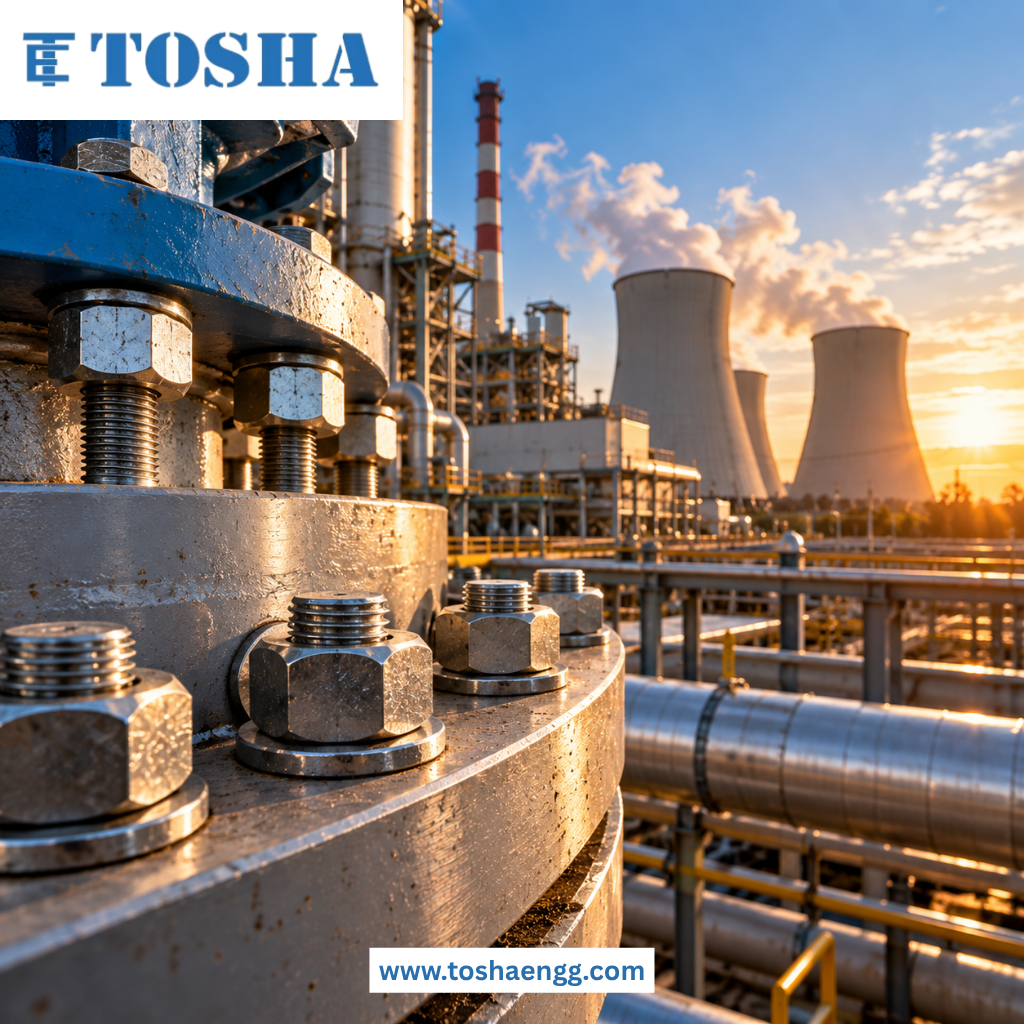
For example, fasteners used around a turbine may need to accommodate vibration and repeated operating cycles. Components installed in a boiler or steam system may require materials suitable for elevated temperatures and pressure-related service conditions. Meanwhile, fasteners used outdoors may need to withstand moisture and atmospheric exposure.
This is why selecting Industrial Fasteners for Power Plants requires careful consideration of the application rather than relying on size or price alone. The right specifications help support equipment reliability, simplify maintenance, and reduce the likelihood of avoidable fastening problems.
Where are Fasteners Used in Power Plants?
Boilers and Steam Pipelines
Boilers and steam pipelines are essential parts of many conventional power generation facilities. These systems transport or generate steam under demanding operating conditions, making the selection of suitable fastening components particularly important.Bolts, nuts, and stud bolts may be used in flanged connections, equipment assemblies, and other components where specified by the system design. Temperature, pressure, thermal expansion, and the condition of the joint all influence the choice of fastener.
In these environments, High Temperature Fasteners must be selected according to the actual service conditions and applicable engineering requirements. Using an unsuitable material or incorrect grade can affect joint performance, particularly when equipment experiences repeated heating and cooling.
Turbines and Power Generation Equipment
Turbines are among the most critical components in power generation facilities. Whether a plant uses steam or gas turbines, its equipment relies on carefully engineered assemblies that must operate consistently over extended periods.
Power Generation Equipment Fasteners
Power Generation Equipment Fasteners are used in suitable machinery assemblies, equipment supports, casings, and auxiliary systems. Depending on the application, the fastening components may need to accommodate vibration, mechanical loads, temperature changes, and regular maintenance.The specifications provided by the equipment manufacturer should guide the selection process. Matching the fastener dimensions, material properties, and installation requirements to the intended application helps maintain the integrity of the assembly.
Heat Exchangers and Condensers
Heat exchangers and condensers help transfer heat and manage working fluids throughout a power plant. Because these components can encounter moisture, changing temperatures, and potentially corrosive environments, their fastening requirements deserve careful attention.Fasteners used in these assemblies should be compatible with the surrounding materials and the conditions in which the equipment operates. Depending on the application, carbon steel, alloy steel, or stainless steel may be considered.
The important point is to choose a material based on its suitability for the actual environment, rather than assuming that one material will work equally well across every part of the facility.
Structural Supports and Industrial Installations
Power plants also depend on structural steel frameworks, equipment platforms, pipe supports, mounting assemblies, and access structures. These installations require fastening components capable of meeting their specified mechanical and environmental requirements.Bolts, nuts, threaded rods, and anchoring products may be used in these applications, depending on the connection design. Factors such as load capacity, fastener grade, base material, installation method, and exposure to outdoor conditions influence the final selection.
Common Types of Fasteners Used for Power Generation
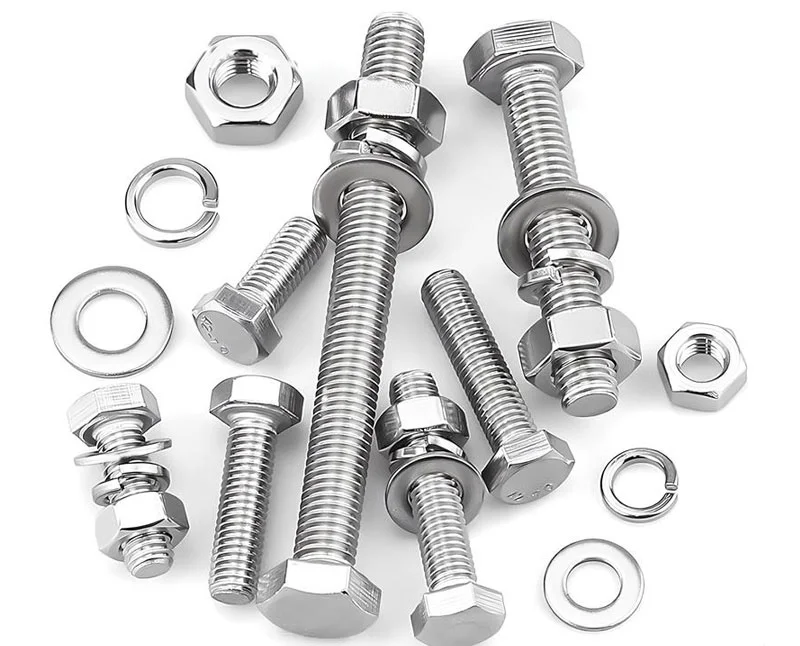
Different applications require different fastening products. Understanding their basic functions makes it easier to identify the right solution for a particular installation.Bolts and nuts are widely used to join structural components, secure machinery, and assemble industrial equipment. Their dimensions, strength grades, thread specifications, and tightening requirements must match the intended connection.
Stud Bolts for Power Plants are another important fastening option. These threaded components are commonly specified for suitable flanged connections, pressure equipment, and other assemblies designed to use studs and nuts. The required material grade, thread dimensions, and mechanical properties depend on the application and operating conditions.
Washers may be used to distribute loads, protect contact surfaces, or perform other functions defined by the joint design. Threaded rods and anchoring products are useful in appropriate mounting and support applications.
Although these components may appear straightforward, choosing the correct type and specification is essential. Even a high-quality fastener can perform poorly if it is incompatible with the equipment or installed incorrectly.
Understanding Fastener Materials for Power Generation
Material selection is one of the most important considerations when sourcing fastening products for power generation facilities. Different materials offer different levels of strength, corrosion resistance, and performance at elevated temperatures.
Carbon Steel and Alloy Steel
Carbon steel fasteners are commonly used in industrial assemblies and structural applications where their specified properties meet the design requirements. They can be a practical option for many connections that do not require specialized material characteristics.Alloy steel fasteners may be considered for applications that require particular mechanical properties or performance under demanding service conditions. However, suitability depends on the specific grade, heat treatment, operating temperature, and design requirements.
Stainless Steel
Stainless steel fasteners are often selected for applications where resistance to moisture and certain forms of corrosion is important. They may be suitable for specific auxiliary systems, outdoor installations, and equipment exposed to particular environmental conditions.However, stainless steel is not automatically the best choice for every power plant application. The grade must be compatible with the temperature, surrounding materials, chemical exposure, and expected mechanical loads.
Specialized High-Temperature Materials
Some power generation applications require fastener materials capable of retaining suitable mechanical properties at elevated temperatures. Depending on the service conditions, engineers may specify particular alloy steels or heat-resistant alloys.Selecting Fastener Materials for Power Generation involves evaluating more than room-temperature strength. Factors such as temperature-related strength loss, oxidation, thermal cycling, corrosion, and long-term service conditions may influence the decision.
For this reason, the material grade should always be checked against the equipment manufacturer's requirements and relevant engineering standards.
How to Choose the Right Power Plant Fasteners
Finding suitable fastening products starts with understanding where and how they will be used. The requirements for a structural support are different from those for a high-temperature steam connection, so every application should be evaluated individually.Operating conditions are a good starting point. Engineers should identify the expected temperature, pressure, and environmental exposure before deciding which fastener specifications are appropriate.
Mechanical loads and vibration also matter. The connection must be designed for the expected tensile and shear loads, as well as any cyclic stresses or vibration associated with the equipment.
Material compatibility deserves equal attention. The fastener must be suitable for the surrounding environment and connected materials, particularly where moisture, chemicals, or elevated temperatures are involved.
Standards and documentation should be confirmed before placing an order. Depending on the application, requirements may reference ASTM, ASME, ISO, or other relevant specifications. Buyers should verify the exact grade, dimensions, mechanical properties, inspection requirements, and documentation needed for the project.
Finally, installation and maintenance should not be overlooked. Correct tightening procedures, suitable tools, compatible lubrication where specified, and regular inspection all contribute to reliable fastening performance.
Taking the time to evaluate these details helps businesses source Energy Fasteners that are appropriate for their intended applications, rather than making decisions based only on availability or initial cost.
Sourcing Industrial Fasteners for Power Plants
Finding a suitable supplier is an important part of the procurement process, particularly when a project involves multiple fastener types, precise specifications, or demanding operating conditions.A reliable sourcing process begins with clear technical information. Sharing the application, dimensions, required material grade, applicable standards, quantity, and any certification or inspection requirements helps the supplier understand what the project needs.
Tosha Engineering Private Limited supplies industrial fastening and engineering components, including bolts, nuts, screws, threaded rods, and other fastening products. Businesses looking for Industrial Fasteners for Power Plants can review the available product range and discuss their specific requirements with the company.
Before confirming an order, buyers should ensure that the proposed fasteners meet the relevant technical specifications and that any required material certificates or inspection documents can be provided. You can explore the Tosha Engineering Private Limited to learn more about its industrial fastening solutions.
Also Read: Agricultural Machinery Fasteners: Choosing the Right Bolts, Nuts & Screws
Conclusion
Fasteners may be small compared with the equipment they secure, but their role in power generation should never be underestimated. From boilers and steam pipelines to turbines, heat exchangers, and structural supports, every application has its own requirements.Choosing the right Power Plant Fasteners means looking beyond dimensions and cost. Material suitability, operating temperature, mechanical loads, corrosion exposure, engineering standards, and installation practices all contribute to the performance of a fastening connection.
By understanding these factors and working with suppliers who can address the project's technical requirements, engineers and procurement teams can make more informed sourcing decisions. The goal is simple: select fastening components that meet the application specifications and support dependable power plant operation.