

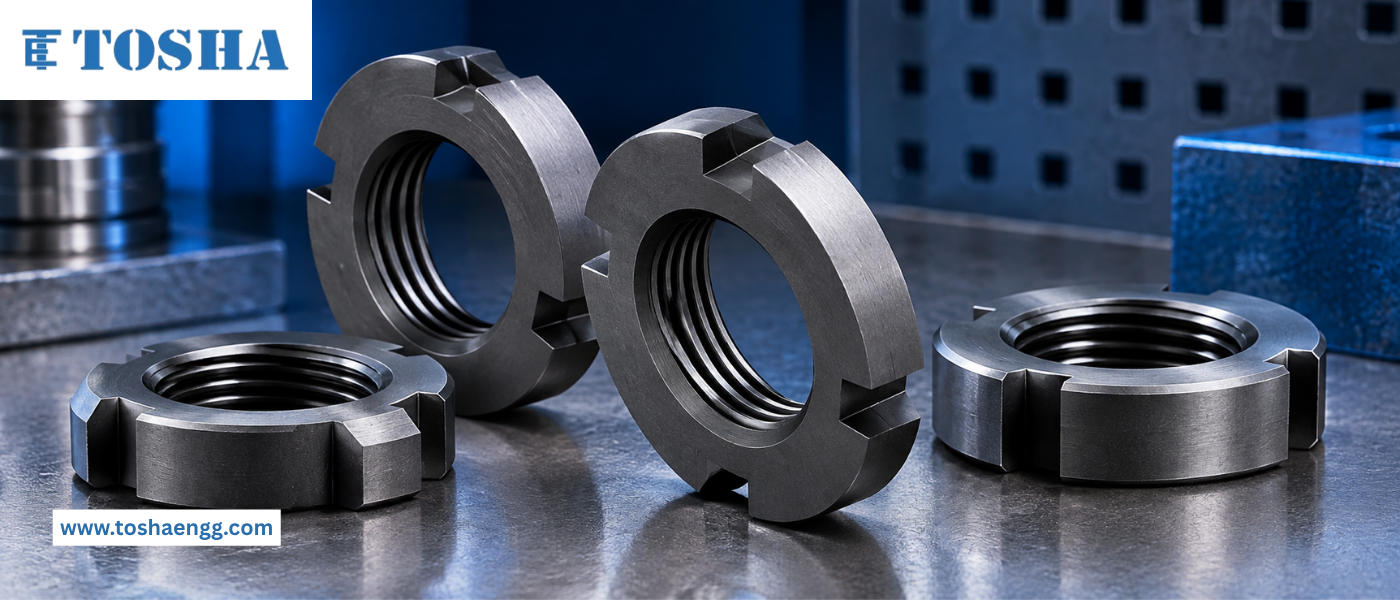
What are Slotted Round Nuts?
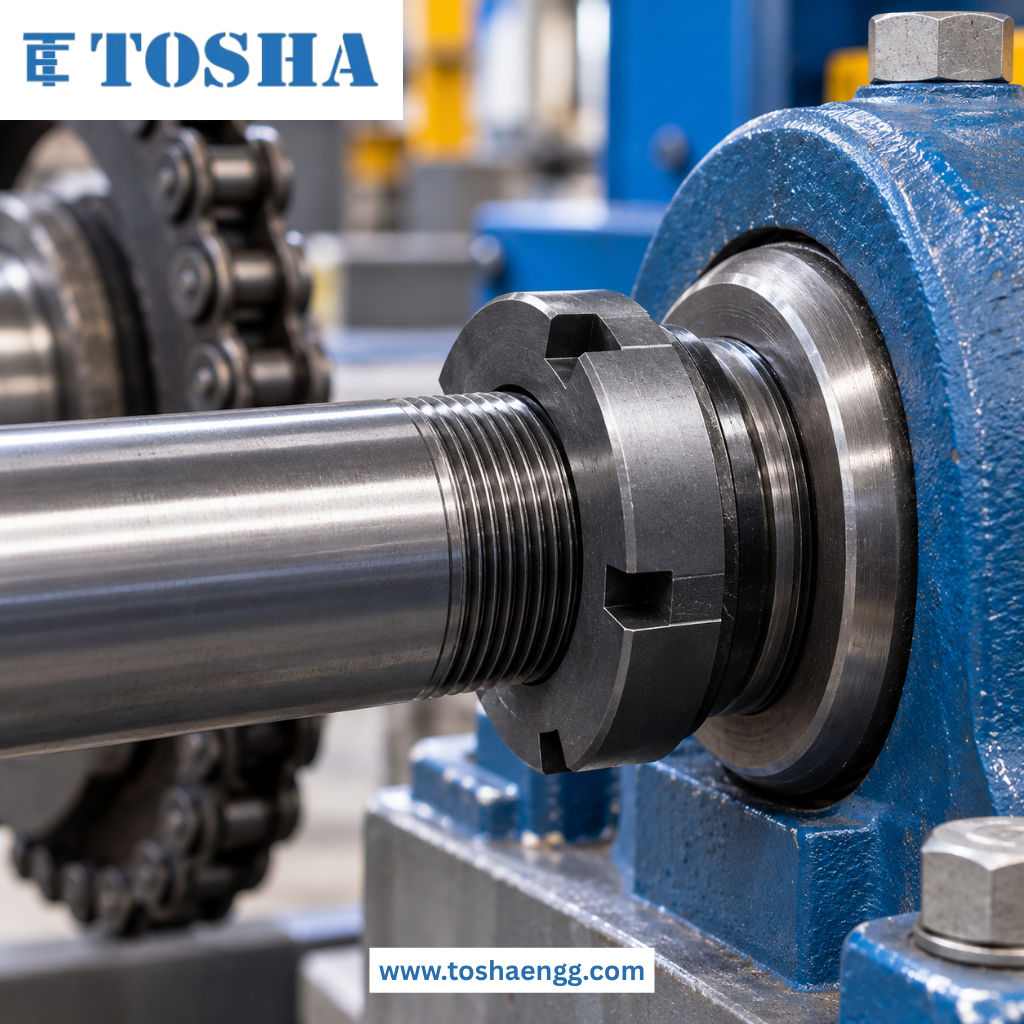
Slotted Round Nuts are cylindrical nuts with notches cut evenly around the outer edge. Instead of a regular wrench, you tighten them with a hook spanner or a C-spanner that fits into those notches. This is handy when space is tight or when you need a clean, flush finish with no sticking-out corners. Most Round Slotted Nuts are paired with a tab washer or lock washer. One tab of the washer bends into a slot, and the nut cannot turn loose, however much the machine shakes.What Makes Them Special?
A few things explain why engineers keep choosing them:- Compact shape: They fit into small spaces where hex nuts would not.
- Fine adjustment: You can set bearing preload accurately, a little at a time.
- Reliable locking: With a washer or set screw, they stay put.
- Even pressure: The load spreads smoothly across the contact surface.
- Clean profile: No sharp corners to snag on anything.
Where You Will Find Them
You will spot these nuts in places where precision matters more than anything else:- Bearing housings and machine spindles
- Gearboxes and transmission systems
- CNC machines and machine tools
- Pumps, motors, and rotating shafts
- Agricultural and construction equipment
Why Stainless Steel Is Worth Considering
Regular steel nuts do fine in dry, indoor settings. Add moisture, chemicals, or washdowns, and rust shows up quickly. Stainless Steel Slotted Nuts avoid that problem. They resist corrosion and keep their strength and appearance over time.They are a smart pick for marine equipment, food and pharma machinery, water treatment plants, and anything used outdoors. Yes, they cost more at the start. But when you stop replacing rusted parts every year, the savings add up.
Built for Tough Jobs
Production lines and heavy machinery do not give fasteners an easy life. Industrial Slotted Nuts are made with tight tolerances and strong threads, so they handle constant rotation, vibration, and heavy loads without drama. They also come off easily during maintenance, which your service team will appreciate.How to Choose the Right One
Before you order, run through this quick checklist:- Material: Carbon steel for general use, stainless for corrosive conditions.
- Thread size and pitch: These must match your shaft exactly.
- Load and vibration: Pick a grade that suits your working conditions.
- Coating: Zinc, black oxide, or plain, depending on where it will be used.
- Locking method: Make sure it works with your washer or set screw.
- Tolerance: Tighter is better for bearings and high-speed parts.