

Introduction
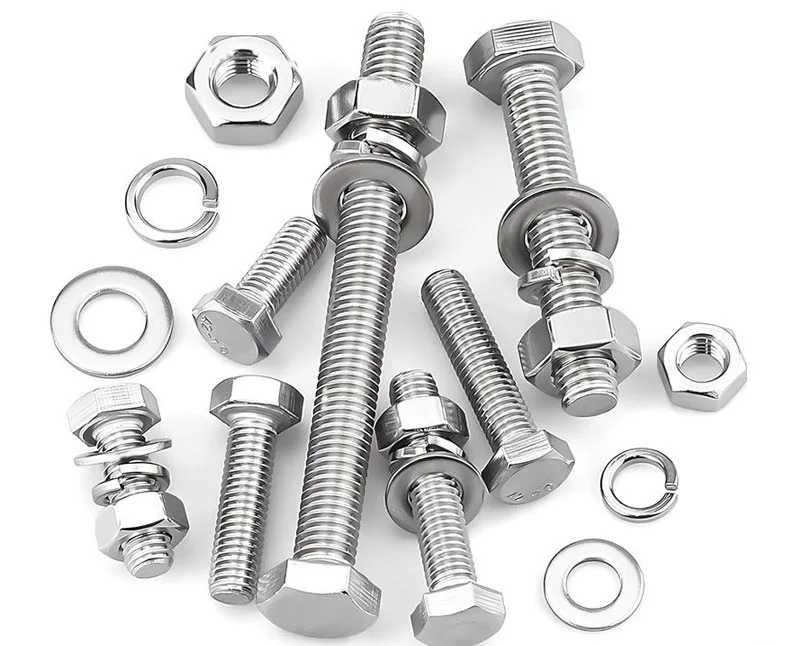
In contemporary engineering, precision, durability and reliability are key. Although larger machine parts often get the spotlight, the true strength of any assembly is really in its fastening systems. Industrial Pins & Fasteners are important components that keep structures together, hold them in alignment, transfer loads or force and allow thousands of other machines to move safely across several industries.Whether industrial pins are used in manufacturing plants, automotive production lines, construction equipment, or heavy machinery, they are designed for specialized mechanical functions. Choosing the proper fastening solution can optimise performance, minimise maintenance and help achieve a longer equipment life.
The Importance of Industrial Pins & Fasteners
All kinds of machines are made up of plenty of rotating and stationary components that have to operate in harmony. Industrial Pins & Fasteners ensure that the connections created are secure but allow components to perform their primary functions and are designed so as not to fail.These precision-engineered products are designed for applications where vibration, heavy loads, repeated movement and adverse environmental conditions will be encountered. Engineers have turned to a whole set of specialized fasteners to meet the specific performance requirements required for these applications since one solution cannot possibly provide adequate fastening in all situations.
Spring Pins for Dynamic Applications
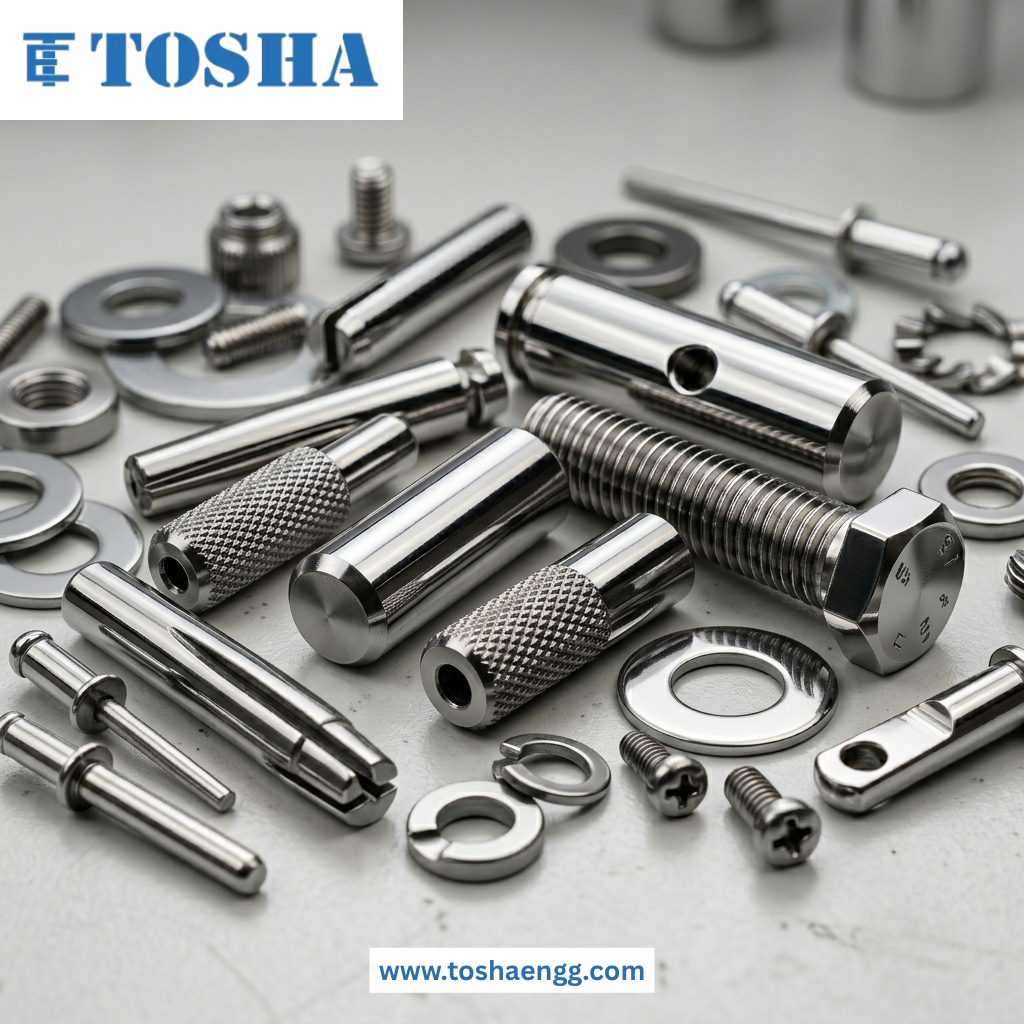
Spring Pins are slotted cylindrical fastening components that compress during placement and are among the most popular options. This ensures constant pressure against the hole wall, thus creating a secure fit.Spring Pins are used extensively in automotive assemblies, power tools, industrial machinery and electrical equipment due to their vibration-resistant properties. They are ideal for applications where motion and shock can act to pull the holding surface apart since they retain their holding power even under dynamic conditions.
Accurate Positioning with Parallel Pins
Parallel Pins are a reliable solution when precision alignment is required. These pins have a uniform diameter, allowing machine components to be positioned and locked in place accurately.Parallel Pins are often used in industries such as aerospace, manufacturing and precision engineering to ensure alignment of assembled parts. They are dimensionally consistent, allowing for smooth operation with less risk of assembly errors.
Contact us for information!
Secure Mechanical Connections Using Taper Pins
Taper Pins are unique because they have a gradual taper that allows a tight fit in mating tapered holes. This design creates a very strong mechanical lock between two connected components so that they cannot move unintentionally.For applications that include gears, couplings, pulleys and rotary shafts, Taper Pins provide an effective degree of stability and load-bearing capacity. Designed to fit tightly, these pins are ideal for demanding environments where performance is vital.
Extended Retention Force with Grooved Pins
Grooved Pins provide the answer for demanding applications that require maximum holding power. They have longitudinal grooves that deform on insertion, providing an interference fit with high retention strength.The design of Grooved Pins allows them to remain securely in place when exposed to vibration or repeated mechanical stress. Hence, they are used mainly in automotive systems, industrial equipment and manufacturing assemblies.
Keystock, Connecting Machine Components
Keystock is a type of fastening component that is utilized to connect rotating machine components and transmit torque between a shaft and a hub. Unlike standard fastening pins, it is normally produced in square or rectangular sections and fits into a matching keyway.Keystock serves various industries in motors, pumps, gearboxes, conveyors and power transmission systems. It reduces rotational slippage, ensuring both improved energy transfer efficiency and dependable machine operation.
Flexible Connections with Clevis Pins
Clevis Pins are used in applications where frequent assembling, disassembling and controlled movement are required. They serve as pivot points on mechanical linkages and provide a secure yet removable connection. These versatile fasteners are employed in agricultural machinery, construction equipment, hydraulic applications and transportation systems where regular maintenance may be required.Locking Solutions with Cotter Pins and Spring Cotters
Locking devices are essential for preventing fastener failure in engineering environments where safety is a priority. Cotter Pins are simple components that lock nuts, bolts and shafts in place to prevent loosening during operation.Likewise, Spring Cotters deliver added flexibility and are proven locking methods. They are particularly well-suited for applications that may be subject to constant vibration or repeated motion. Both fastening solutions contribute to safer and more reliable mechanical assemblies.
Also Read: How Precision Engineering Components Improve Manufacturing Efficiency
Conclusion
The success of a modern engineering project heavily relies on the right selection of Industrial Pins & Fasteners for each application. Whether it is the versatility of Spring Pins, the accuracy of Parallel Pins, the secure fit of Taper Pins, the retention strength of Grooved Pins, the torque-transmitting capability of Keystock, the flexibility of Clevis Pins, or the locking performance of Cotter Pins and Spring Cotters, each component plays a vital role.Industries continue to invest in high-quality fastening solutions to improve safety, increase equipment lifespan and enhance operational efficiency.