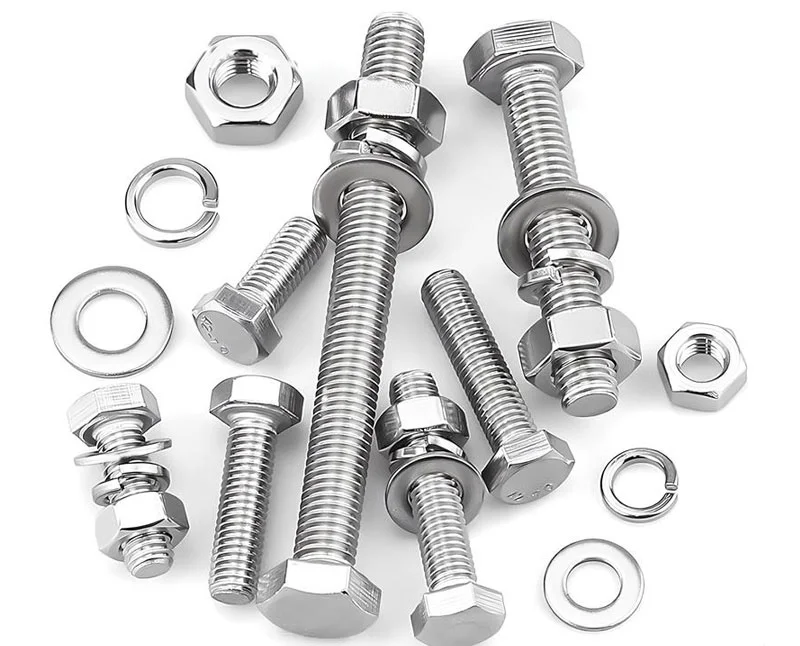


Tosha Engineering provides a wide selection of industrial fasteners such as bolts, nuts, studs, threaded components and customised fastening solutions. Its fastener portfolio is designed for demanding applications in construction, manufacturing, automotive, engineering, energy and heavy machinery.
What is a Double End Reduced Shank Stud
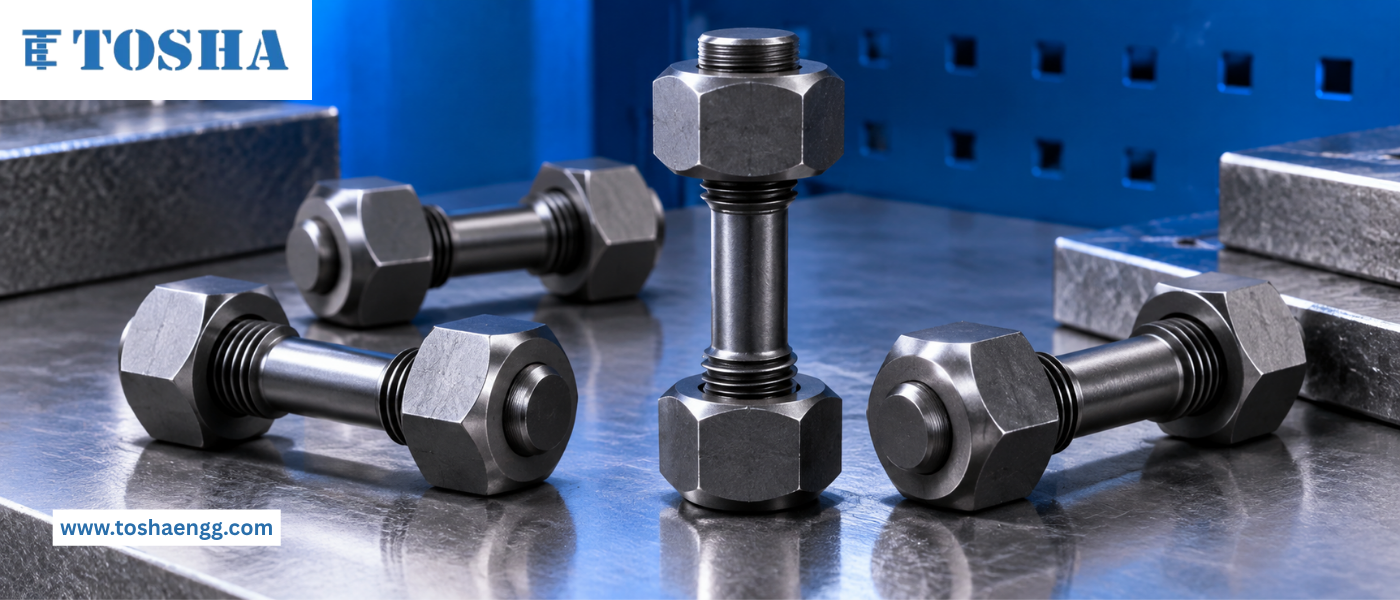
A Reduced Shank Double End Stud is a type of stud fastener that has threaded portions at both ends with a reduced diameter portion between them. It does not rely on a bolt head for tightening, unlike a normal headed bolt.The two threaded ends can be connected with nuts, tapped parts, flanges, or other matching parts, depending on use. The reduced center portion might be advantageous if space, alignment or component geometry is important and can provide greater clearance around the attachment region. The Reduced Shank Studs are especially useful when engineers require a fastening solution that provides secure threaded contact but a reduced or application-specific central profile.
Where are Reduced Shank Studs Used?
The exact use relies on the material, the diameter, the thread specification, the length, the grade and the mechanical attributes required. Double-ended studs, however, are generally connected with industrial equipment and assemblies where a stud must be left in place when components are being fastened or removed. Typical applications can include:1. Industrial Machinery
Secure fastening around housings, coverings, flanges and mounting components is typically needed in machinery assembly. Double Ended Stud Bolts may still place and fasten components properly with threaded engagement on both ends.2. Flange Connections
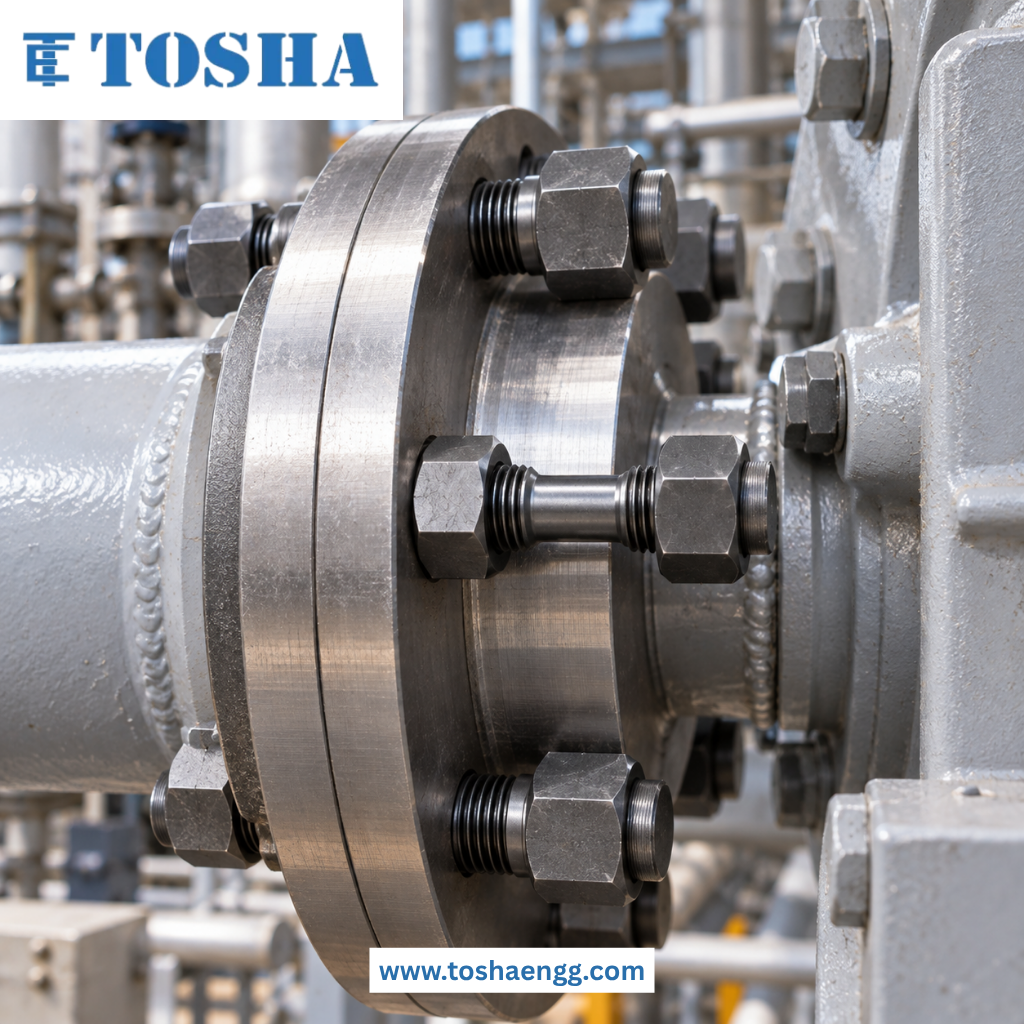
Stud type fasteners are often used in flange assemblies because nuts can go on both ends. If greater clearance is necessary between connected components, a shortened shank arrangement can be utilised.3. Automotive and Engineering Equipment
Automotive and engineering assemblies commonly require precise fastening components that are built to particular dimensions and material standards. Depending on the design, the reduced-shank studs provide repeatable assembly and serviceability.4. Heavy Industrial Equipment
Industrial equipment is subjected to vibration, mechanical stresses, temperature variations and periodic maintenance. Thus, it is crucial to choose the right Industrial Stud Fasteners as per technical requirements to retain the integrity of connections.Why Does the Reduced Shank Matter?
The decreased shank is not only about the size. It can have a utilitarian engineering use. In cases where fastener clearance is limited by other components, a smaller central section might provide increased clearance around the fastening. It can also be used to accommodate certain joint designs or to create a marked transition between threaded portions.However, the decreased diameter must always be set according to the load requirements of the application. Engineers should consider tensile loads, shear forces, thread engagement, material grade, operating temperature, corrosion exposure, and applicable standards when selecting a fastener.
Stainless Steel Double End Stud Bolts for Corrosive Environments
Another crucial thing is the choice of materials. Stainless Steel Double End Stud Bolts are perfect for situations where corrosion resistance is important.Stainless Steel Fasteners are extensively employed in locations exposed to moisture, outside weather conditions, chemicals or other corrosive causes. Tosha Engineering says stainless-steel fasteners offer corrosion resistance and can be used indoors as well as outdoors.
However, it is still important to choose the right one for the real service environment, instead of believing all types of stainless-steel fasteners will behave the same.
How to Choose the Right Double End Stud
Buyers of a Double End Stud With Reduced Shank should not just decide on overall length or diameter but should be given full technical parameters. Important factors include:- Material and grade
- Thread diameter
- Thread pitch
- Thread length at each end
- Overall length
- Reduced shank diameter
- Required tolerances
- Surface finish or coating
- Operating environment
- Applicable manufacturing standard
- Quantity and delivery requirements
Why Buy from a Reputable Reduced Stud Bolt Supplier?
A trusted Reduced Stud Bolt Supplier should be capable of comprehending technical requirements, ensuring dimensional consistency and supplying the suitable material and standards for the desired application.Tosha Engineering asserts it produces customised and precision engineered fasteners according to customer designs and specifications, and its product line includes industrial fasteners and engineering components.
Technical communication is especially critical for buyers sourcing Double End Stud Bolts Manufacturer solutions as slight dimensional discrepancies might effect fitting, thread engagement, installation and overall assembly performance.
Why Choose Tosha Engineering for Industrial Stud Fasteners?
Tosha Engineering Private Limited, Faridabad, Haryana, is an industrial fastening solutions provider for various industries. The company offers bolts, nuts, studs, threaded rods, washers, anchoring devices and other engineering components.It claims that it can provide custom fasteners, precision engineered components, quality control and supply support for industrial needs. If you have a project that needs a specific Reduced Shank Stud, then send us your drawing, dimensions, material requirement, quantity and application and we will find the right fastener for you.
Conclusion
A Double End Stud With Reduced Shank is a specialized fastening component designed for assemblies where threaded engagement at both ends, and a reduced central diameter can provide functional advantages. From machinery and flange assemblies to automotive and heavy engineering applications, these studs can be selected for applications requiring specific dimensional and fastening characteristics.The right material, thread specification, dimensions, and mechanical requirements are essential for reliable performance. Whether you require Stainless Steel Double End Stud Bolts, customized Double Ended Stud Bolts, or other Industrial Stud Fasteners, choosing a manufacturer or supplier capable of meeting precise specifications can help ensure proper fit, consistent quality, and dependable assembly performance.