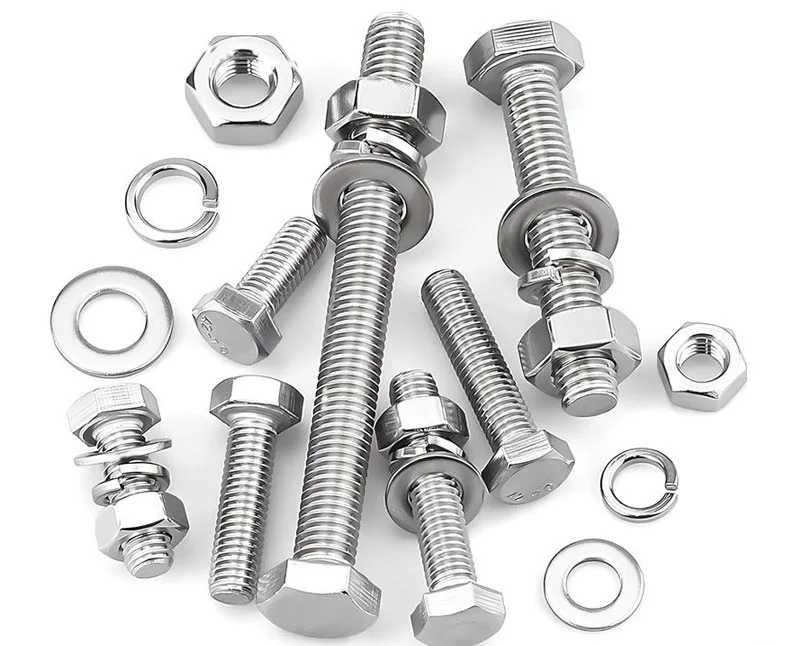


Durability is the single biggest reason industries favor stainless steel. Stainless steel is more resistant to corrosion, moisture and wear than regular steel. Which translates to fewer annual replacements and less maintenance with a fastening that should remain out of service for years. The nuts are not made for the same job, however. Some of it is made to withstand vibration, some improves load distributions and others are specifically designed for safety-critical applications. Knowing the varieties and types of grades enable you to be able to select the appropriate fastener for a specified environment. Although they are robust nuts made specifically for maximum strength and durability, they also have a variety of unique self-locking features.
Stainless Steel Nuts are internally threaded fasteners that are used in conjunction with bolts, screws, or threaded rods to make non-permanent connections. They are made from stainless steel alloys with chromium in them which creates a protective layer against rust and corrosion. That shielding helps a lot in severe environments. Apart from outdoor exposure, humidity, chemicals or constant vibration there are many cases when stainless steel would be much better than regular metal fasteners. Stainless steel nuts are frequently used in:
- Construction projects
- Automotive systems
- Marine equipment
- Furniture manufacturing
- Industrial machinery
- Food processing equipment
Common Stainless-Steel Grades
Stainless Steel Nuts comes in different grades, with varying strength and corrosion resistance. The applicable grade is generally determined from the intended uses of the fastener.Grade 304 Stainless Steel
304 is the most common grade of stainless steel. It provides outstanding corrosion resistance and moderate durability for general use cases. It works well in:- Indoor installations
- Furniture hardware
- Kitchen equipment
- General industrial environments
Grade 316 Stainless Steel
Molybdenum has its place in 316 stainless steels for added resistance to salt water and extreme chemicals. This grade is ideal for:- Marine environments
- Coastal construction
- Chemical industries
- Pharmaceutical equipment
Grade 410 Stainless Steel
410 stainless steels have lower corrosion resistance than 304 and 316, but higher hardness and strength. It’s often used where:- Wear resistance matters
- High strength is needed
- Environmental exposure is moderate
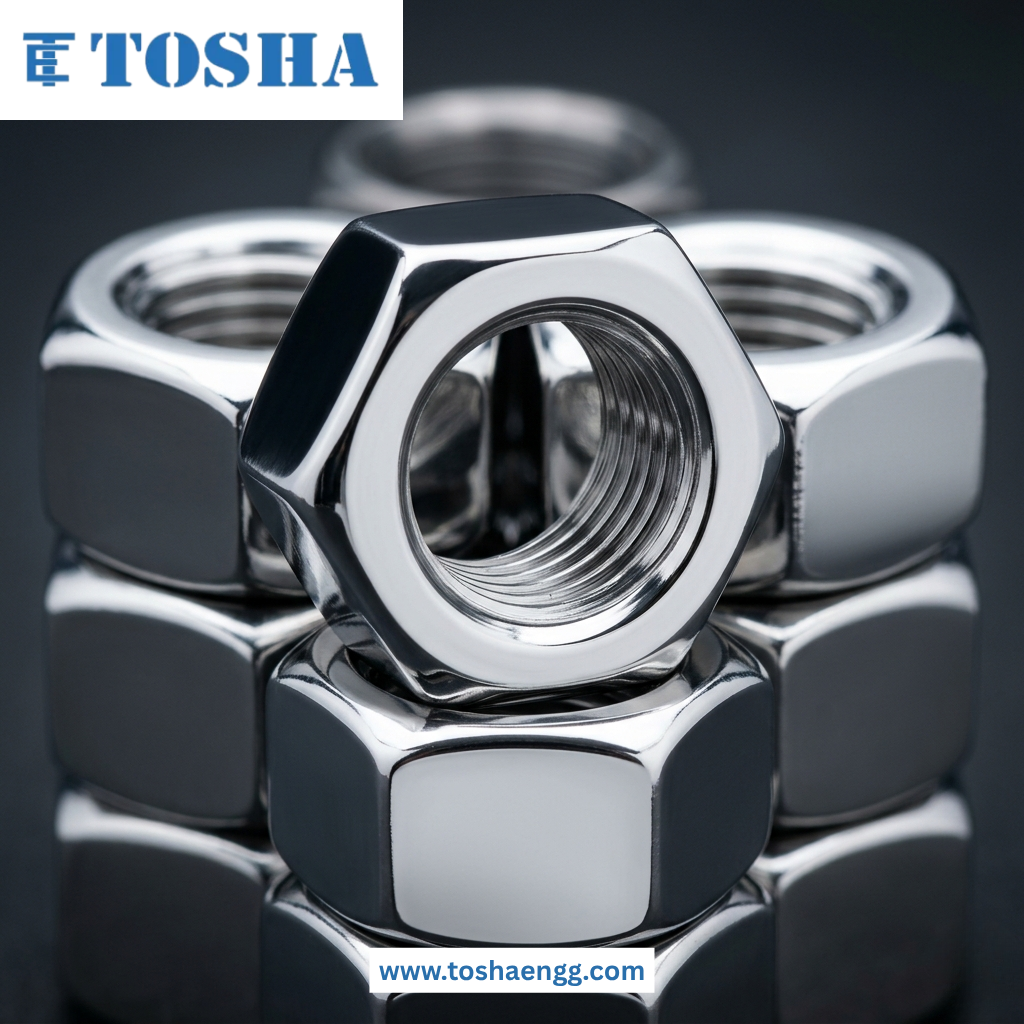
Hexagon Nuts - The Most Common Type
The first thought that strikes the mind of people when they hear about nuts is Hexagon Nuts. The six-sided design makes it slip-proof with common wrenches and spanners. They’re used across:- Construction
- Machinery
- Automotive assemblies
- Structural fastening systems
Jam Nuts and Lock Nuts
Jam Nuts are thinner than regular nuts, they are used with another nut to avoid loosening. They aid in enhancing fastening stability for mechanical assemblies.Lock Nuts are instead a type literally that is designed to stay on and resist loosening due to vibration and movement. They are widely used in the industrial sector, where continuous movement can loosen typical bolts. Lock nuts use a nylon insert or special metal locking action.
Contact us for more information!
Cap Nuts and Flange Nuts
Cap Nuts have a dome-shaped closed end that encompasses exposed bolt threads. This enhances safety while providing a cleaner final look. They’re commonly used in:- Furniture
- Decorative fixtures
- Gym equipment
- Consumer products
- Reduce surface damage
- Improve grip strength
- Prevent loosening
Wing Nuts and Castle Nuts
Not every fastening task needs the big guns. Wing Nuts are often used to make quick adjustments by hand. It has wing-shaped sides for easy installation without spanners or wrenches. They’re commonly found in:- Adjustable systems
- DIY projects
- Lighting equipment
- Temporary setups
- Automotive steering systems
- Aerospace applications
- Heavy machinery
Weld Nuts and Structural Nuts (HV)
Weld Nuts are designed to weld directly onto metal surfaces and permanent installation. These are widely used both in sheet metal fabrication and automotive as they provide robust threaded connections. These nuts offer ease of assembly but also increase durability.Structural Nuts (HV) are structural nuts designed to be used with heavy duty fasteners to form high-strength structural connections. They’re commonly used in:
- Steel construction
- Bridges
- Industrial buildings
- Infrastructure projects
Different Specialty Stainless Steel Nuts
It should be noted that based on technical requirements, some fastening systems require other types of nut designs.Connection Nuts: Connection Nuts are the long coupling nuts that are used for connecting multiple threaded rods.
Thumb Nuts: Thumb Nuts enable easy hand tightening in adjustable equipment and fixtures.
Slotted Round Nuts: These are nuts used in precision applications which demand locking function.
Square Nuts: These nuts have wider gripping surfaces and are mostly used in older machines or heavy-duty fixtures.
Special Nuts: Special Nuts are customized for special engineering and industrial applications.
Round Nut W/Pin Holes: Pin holes for installation with specialized tools in precision mechanical systems are present in these nuts.
The Right Stainless-Steel Nut to Ground
Making the right choice of nut is based on multiple factors:- Environmental exposure
- Corrosion risk
- Load requirements
- Vibration levels
- Installation method