

Introduction
The Efficiency of Manufacturing is ONE of the main keys to modern industrial operations success. The drive to push production limits while minimizing operational costs and ensuring product consistency makes the need for precise and trustable components ever more important as industries fasten up their service delivery. Precision Engineering Components lie at the core of this change and are fundamental components of cutting-edge machinery, production equipment and force in automated manufacturing plants.From automotive production and heavy engineering to construction equipment and aerospace systems as well as industrial machinery, precision components make sure that every process runs with high accuracy and reliability. The slightest deviation of workpiece dimensions can cause machine inefficiency, increased wear, downtime in production and expensive maintenance. And this is exactly why manufacturers from across the sectors are heavily investing in precision engineered solutions that assist in improving performance and enhancing overall Manufacturing Efficiency.
Understanding Precision Engineering Components
Precision Engineering Components are components produced with very tight tolerances and exact specified parameters. These parts are engineered to work seamlessly on the machines and equipment which have a high demand for accuracy, longevity and consistency in performance.Unlike conventional components, precision-engineered parts are manufactured using advanced engineering techniques and manufacturing processes combined with the most stringent quality control measures ensuring superior dimensional accuracy. Their role is not limited to keeping machines running but also improving the efficiency and durability of industrial equipment.
With the evolution of manufacturing technologies, precision engineering has gone from a competitive advantage to a necessity. Today's industries require components that are capable of consistently performing at high levels in challenging operating environments while adhering to strict quality parameters.
The Direct Connection Between Precision and Manufacturing Efficiency
The efficiency of any manufacturing operation is based on the reliability of machinery. Machines are only as good as the sum of their parts. If a part is poorly manufactured, it can result in friction, misalignment, vibration and excessive wear all things that adversely affect productivity.On the contrary, superior Precision Engineering and Machine Components promote smooth functioning of machines and maintain production systems with minimum interruptions. Quality parts ensure your equipment performs optimally in order to minimize downtime and provide process stability. This ensures that manufacturers reach a higher production level while maintaining consistent quality.
The direct linkage between component precision and operational performance means that precision engineering must be at the core of any effort to improve overall Manufacturing Efficiency.
Reducing Downtime with Precision Machined Components
Of these challenges, unplanned equipment downtime constitutes one of the biggest issues for manufacturing facilities. Every moment spent by machines being idle results in loss of production, missed deadlines and increased operational costs.This is where Precision Machined Components make a huge difference. Since these parts are manufactured with great precision, they fit into machinery perfectly and experience lower mechanical stress during operation. Less stress means lower wear rates, fewer component failures and longer service life.
Since machines need fewer repairs and replacements, maintenance schedules become more predictable while production disruptions are minimized. This enables manufacturers to focus on achieving production targets rather than dealing with unexpected equipment breakdowns.
Over time, this reduction in downtime contributes significantly to improved Manufacturing Efficiency and lower operating expenses.
Contact us for information!
The Role of CNC Components in Modern Manufacturing
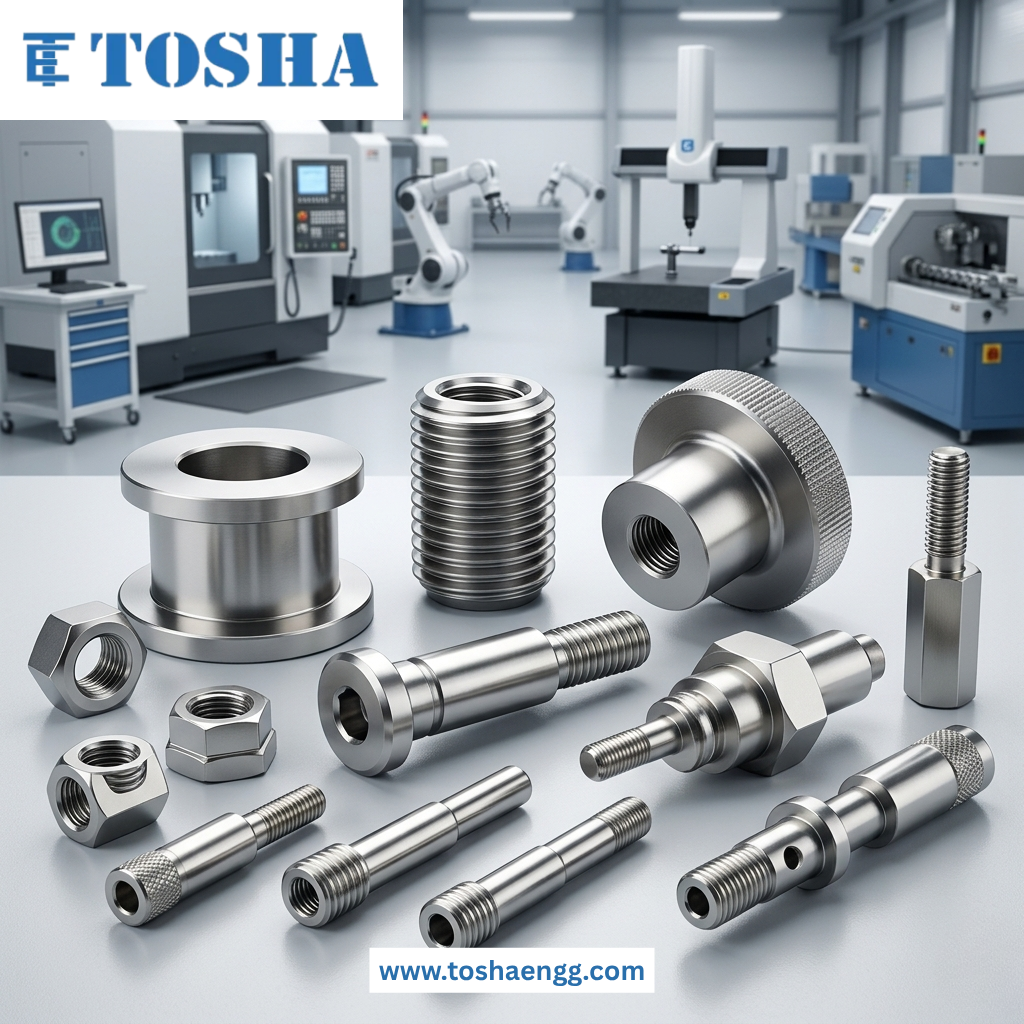
The growing popularity of sophisticated manufacturing technology has increased the importance of CNC Components. Computer Numerical Control (CNC) machining has transformed the production of engineering parts by delivering exceptional accuracy, repeatability and consistency.The variations associated with traditional manufacturing methods are largely eliminated through CNC technology. Automated programming and computer-controlled machinery enable manufacturers to create complex parts with extremely tight tolerances and consistent quality.
CNC Components are utilized to ensure perfect functioning of industrial equipment. Such precision enables faster production cycles, reduced raw material waste and enhanced product quality. In addition, CNC manufacturing helps businesses create custom components designed for specific industrial needs, providing greater flexibility in manufacturing operations.
As industries increasingly adopt automation and smart manufacturing systems, CNC-machined parts will continue to play a critical role in improving efficiency and productivity.
Improving Product Quality Through Precision Engineering
Effective production depends on the precision of manufacturing equipment and its components, which directly impacts product quality. Machines equipped with high-quality Engineering Parts are capable of maintaining tighter production tolerances, resulting in more consistent and reliable finished products.In industries such as automotive, aerospace and industrial machinery, even minor dimensional inaccuracies can lead to performance issues and product failures. Precision-engineered components eliminate these risks by ensuring machinery operates with maximum accuracy throughout the production process.
Consistent product quality reduces rejection rates while improving customer satisfaction and strengthening brand reputation. For manufacturers, this translates into lower quality-related costs and stronger competitiveness in the marketplace.
Why Industrial Machine Parts Matter
Machinery and equipment utilized in industrial environments are subjected to significant demands. Components often operate under heavy loads, continuous operation, vibration and harsh working conditions. In such scenarios, component quality becomes a determining factor in equipment reliability.High-performance Industrial Machine Parts are specifically designed to withstand these demanding conditions while maintaining optimal performance. Their durability reduces the likelihood of breakdowns and ensures stable machine operation over extended periods.
Reliable machinery allows manufacturers to maintain uninterrupted production schedules, improve workplace safety and maximize asset utilization. Consequently, investing in superior Industrial Machine Parts contributes directly to long-term operational efficiency and profitability.
Supporting Industry 4.0 and Smart Manufacturing
The manufacturing industry is rapidly embracing Industry 4.0 technologies, including automation, robotics, artificial intelligence and connected production systems. These advanced technologies rely heavily on precision-engineered components to function effectively.Automated systems require precise motion control, accurate positioning and dependable mechanical performance. Even minor component deviations can affect system accuracy and productivity. Precision Engineering Components provide the foundation needed for smart manufacturing environments by ensuring reliable and repeatable performance.
As industrial facilities continue their digital transformation journey, precision engineering will remain a key driver of innovation and operational excellence.
Long-Term Cost Benefits of Precision Engineering Components
While precision-engineered parts may involve a higher initial investment, they often deliver substantial long-term savings. Their superior durability reduces replacement frequency, while improved machine performance lowers maintenance costs and energy consumption.Additionally, accurate Precision Machined Components help minimize material waste and production errors, further improving profitability. The combination of reduced downtime, enhanced productivity and improved product quality creates a strong return on investment for manufacturers seeking sustainable growth.
Rather than viewing precision components as an expense, forward-thinking organizations recognize them as a strategic investment in operational efficiency.
Also Read: Industrial Applications of Threaded Stainless-Steel Solutions and the Role of Threaded Rod Manufacturers
Conclusion
In today's competitive manufacturing environment, efficiency, reliability and quality are essential for long-term success. Precision Engineering Components play a vital role in helping manufacturers achieve these objectives by improving equipment performance, reducing downtime, enhancing product consistency and supporting advanced production technologies.Whether through high-quality CNC Components, durable Industrial Machine Parts, specialized Engineering Parts or advanced Precision Machined Components, precision engineering continues to shape the future of industrial manufacturing.
Companies that prioritize precision in their operations are better positioned to improve Manufacturing Efficiency, reduce operational costs and maintain a strong competitive advantage in an increasingly demanding industrial landscape.